
• Skip to main content
  • Skip to primary sidebar
  • Vānaprastha Adventure
  • Philosophy – spirituality
    • About reincarnation
    • Do we live more than once?
    • From darkness to light
    • Why chant Hare Krishna?
    • Can one who has sinned be a saint?
    • From master to disciple
    • Don’t badmouth sadhus
    • Who is that girl with Krishna?
    • All on philosophy and spirituality
  • Social commentary
    • The myth of old age
    • The Taj Mahal: enduring monument to love
    • Giving my life for noble bilge
    • Bless this house
    • Arch enemy: Mc-cow-killer comes to India
    • Are you more than green, righteous, and dead?
    • All social commentary
  • 9/11
    • A Distant View of 9/11
    • Radical visions and discarded lies
    • 9/11: “A distant view” revisited
    • 9/11: Items from a small chapter of history
  • More…
    • Kirtana Standards Book
    • Editing
      • Editing the unchangeable truth
      • Gita revisions explained
      • Add notes to Srila Prahupada’s books?
      • BBT editorial resources
      • The editorial policies of the BBT
      • All articles about editing
    • Health
    • About the BBT
    • How to use the VedaBase
    • About the Krishna culture and tradition
    • About unusual doctrines (rtvik)
    • All articles
    • Media Files
  • About
    • Biodata
    • Availability
    • Travel and online schedule
  • Contact
Jayadvaita Swami

Jayadvaita Swami

Personal site

satyam param dhimahi

Latest Article

“Ecstatic dancing” in ISKCON

June 3, 2026 By Jayadvaita Swami Leave a Comment

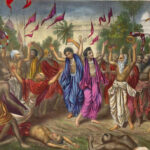
In Śrīla Prabhupāda’s Kīrtana Standards I didn’t say much about dancing. I told a bit about what Śrīla Prabhupāda liked: “The dancing should be done enthusiastically by raising the hands like Panca-Tattva. All of Lord Caitanya’s followers used to dance with raised hands. If someone dances with … Continue reading... about “Ecstatic dancing” in ISKCON

“Ecstatic dancing” in ISKCON

June 3, 2026 by Jayadvaita Swami Leave a Comment

In Śrīla Prabhupāda’s Kīrtana Standards I didn’t say much about dancing. I told a bit about what Śrīla Prabhupāda liked: “The dancing should be done enthusiastically by raising the hands like Panca-Tattva. All of Lord Caitanya’s followers used to dance with raised hands. If someone dances with ecstasy, that is all right, but it is better to dance with raised hands”1. I told of some concocted dancing Śrīla Prabhupāda didn’t like, and of some dancing he liked. But there are various moves and figures we often see in ISKCON dancing that I didn’t talk about, with motifs from square dancing, barn … [Read more...] about “Ecstatic dancing” in ISKCON

Personal vānaprastha story. Vaikuṇṭha and Jāhnavī: “We’re already late”

May 27, 2026 by Jayadvaita Swami Leave a Comment

The Vānaprastha Adventure, Installment 43 Part One of The Vānaprastha Adventure offers principles, guidelines, suggestions, śāstric statements, Purāṇic examples, and instructions from Śrīla Prabhupāda. But what about now? How have devotees taken up the vānaprastha āśrama and lived as vānaprasthas today? For this we have Part Two. Here you’ll find twelve personal stories of contemporary devotees who have retired from family life and taken up the life of vānaprasthas. They’re at different points along the vānaprastha journey and have undertaken it from different directions. One has … [Read more...] about Personal vānaprastha story. Vaikuṇṭha and Jāhnavī: “We’re already late”

Once your family life is almost finished. . .
May 12, 2026 by Jayadvaita Swami

Elderly woman in traditional Indian clothing walking with a cane near a temple at sunset

The Vānaprastha Adventure, Installment 42 Bombay23 December, 1974 Dear Sri Srinivasan, Please accept my greetings. I beg to acknowledge receipt of your letter dated 19-12-74 and have noted the contents. Your life will become perfect if you can engage yourself fully in the devotional service of Sri Krsna. As stated in your letter now you are retired from your job and your daughters are getting married. This means that your grhastha life is almost finished. Therefore, according to Varnasrama Dharma you should spend the rest of your life simply engaged in the devotional service of … [Read more...] about Once your family life is almost finished. . .

A man should not prematurely give up family life
April 26, 2026 by Jayadvaita Swami

The Vānaprastha Adventure, Installment 41 As mentioned in the main text of this book, it is fitting to retire from family life at a mature stage, but a young man should not prematurely give up family life in the name of the vānaprastha āśrama merely to avoid family responsibilities. In this regard, a letter from Śrīla Prabhupāda to his disciple Madhukara Dāsa dated January 4, 1973, is instructive. Madhukara’s wife, Līlā-śakti Dāsī, gives the background of the letter.1 In New Dwarka [Los Angeles] in the early 1970s, it didn’t matter what we wanted or didn’t want, we did what … [Read more...] about A man should not prematurely give up family life

In the vānaprastha āśrama, no sex
April 21, 2026 by Jayadvaita Swami

The Vānaprastha Adventure, Installment 40 Abstinence from sex life is a strict requirement for vānaprastha life. To underscore that point, made in the main text, this appendix gives a selection of statements from Śrīla Prabhupāda to that effect. There is no sex life except in the gṛhastha, or householder, āśrama. The brahmacārī is not allowed any sex, a vānaprastha voluntarily refrains from sex, and the sannyāsī is completely renounced. [Bhāgavatam 4.25.38, purport] In the orders of brahmacarya, vānaprastha and sannyāsa, there are no facilities for sex. [Bhāgavatam … [Read more...] about In the vānaprastha āśrama, no sex

Do it at fifty

April 10, 2026 by Jayadvaita Swami

The Vānaprastha Adventure, Installment 39 As mentioned in the main text of The Vānaprastha Adventure, Śrīla Prabhupāda often made the point that by fifty years of age one should accept the vānaprastha āśrama. I said I would gather statements from him about this in an appendix. Here, then, is a sampling. One is therefore required to give up the attachment to family or social or political life just at the age of fifty years, if not earlier, and the training in the vānaprastha and sannyāsa āśramas is given for preparation of the next life. [Bhāgavatam 2.1.15, purport] In order to … [Read more...] about Do it at fifty

My personal finances, 2025
February 21, 2026 by Jayadvaita Swami

Every year I make my personal finances public. Attached is an accounting of my finances for 2025. … [Read more...] about My personal finances, 2025

The vānaprastha and pre-vānaprastha checklists

February 9, 2026 by Jayadvaita Swami

The Vānaprastha Adventure, Installment 38 The items listed here have been discussed in some detail earlier in the book. (In The Vānaprastha Adventure they appear as Appendix 1.) For the most part the items are listed in no particular order, and some may also overlap. Go through the list and start adopting items, as you may choose. The pre-vānaprastha checklist (Mainly items to adopt long before entering vānaparastha life) The vānaprastha checklist 1) No-risk steps Mental steps Practical steps Up the sādhana Up the sādhu-saṅga Up the sevā 2) … [Read more...] about The vānaprastha and pre-vānaprastha checklists

The end of vānaprastha life
January 17, 2026 by Jayadvaita Swami

The Vānaprastha Adventure, Installment 37 Vānaprastha life ends either with sannyāsa or with death. When one is free from attachment, especially to sex, one can accept sannyāsa.1 By accepting sannyāsa we can follow in the footsteps of Śrīla Prabhupāda and previous ācāryas, fix ourselves firmly in devotional service to the lotus feet of Kṛṣṇa, and with determination cross beyond the insurmountable ocean of material nescience.2 And sannyāsa especially serves as a platform for increased preaching.3 Accepting sannyāsa Traditionally, one might take sannyāsa all of a sudden, as did … [Read more...] about The end of vānaprastha life

Benefits of adopting the vānaprastha āśrama
December 19, 2025 by Jayadvaita Swami

The Vānaprastha Adventure, Installment 36 We have looked at what the vānaprastha āśrama is and what obstructions we might need to deal with. Here let’s look at some of the benefits of accepting the vānaprastha āśrama. Having a realistic picture of what the future has in store Let’s look first at one benefit of even having a vānaprastha āśrama and thinking about it. Acknowledging the importance of the vānaprastha āśrama—and thinking about the vānaprastha āśrama—keeps us mindful of the reality that’s in everyone’s future, including our own: the reality of death. In the Bhagavad-gītā … [Read more...] about Benefits of adopting the vānaprastha āśrama

  • Page 1
  • Page 2
  • Page 3
  • Interim pages omitted …
  • Page 31
  • Go to Next Page »

Primary Sidebar

  • Facebook
  • RSS
  • Twitter
  • YouTube

Writings

  • About 9/11
  • About editing
  • About health
  • About kirtana standards
  • About the BBT
  • About the Krishna culture and tradition
    • Kirtana Standards Book
    • Vānaprastha Adventure
  • About unusual doctrines (rtvik)
  • All articles
  • BBT Africa
  • Philosophy and spirituality
  • Social commentary

Donations

  • Contribute online

Email Updates

Enter your email address and click the button to be notified of new posts by email.

Join 295 other subscribers

Other sites

  • Vanity Karma
  • Caitanya-caritāmṛta audiobook
  • Hare Krishna Search
  • Unicode Support for the Bhaktivedanta VedaBase
  • VedaBase.io
  • BBTedit.com (from Archive.org)
  • Krishna.com
  • The Kadamba Foundation
  • The Bhaktivedanta Book Trust – Africa
  • The Open Vyasa-puja Book
  • Vaisnavas C.A.R.E.
  • Satsvarupa Dasa Goswami
  • Kadamba Kanana Swami
  • The Vaishnava Voice (Kripamoya Dasa)
  • Shyamasundara Dasa (Vedic astrologer)
  • Poetry by Jayanta Dasa

Older News Articles

Personal vānaprastha story. Vaikuṇṭha and Jāhnavī: “We’re already late”

May 27, 2026 By Jayadvaita Swami Leave a Comment

The Vānaprastha Adventure, Installment 43


Part One of The Vānaprastha Adventure offers principles, guidelines, suggestions, śāstric statements, Purāṇic examples, and instructions from Śrīla Prabhupāda. But what about now? How have devotees taken up the vānaprastha āśrama and lived as vānaprasthas today? For this we have Part Two. Here you’ll find twelve personal stories of contemporary devotees who have retired from family life and taken up the life of vānaprasthas.

They’re at different points along the vānaprastha journey and have undertaken it from different directions. One has completed his vānaprastha life and moved on to sannyāsa. Two others left this world, surrounded by kīrtana, while the writing of this book was still in progress.

I don’t agree with every view they express. But then again: I skipped directly from brahmacārī life to sannyāsa, whereas they have lived a life I have only talked about. So they speak from experience.

I am grateful to each of them for sharing their stories and realizations.

There are more vānaprasthas I interviewed, and more I would have liked to have interviewed. But I’ve been slow to finish this book, and at some point we have to say, “Enough. Let’s get the book out.”

Vaikuṇṭha Dāsa and Jāhnavī Devī Dāsī

Before vānaprastha

I first spoke with Vaikuṇṭha and Jāhnavī about vānaprastha life in February of 2022 in Alachua, Florida. I had heard they were moving towards the vānaprastha āśrama, so I was keen to speak with them (along with their friends Devārṣi Dāsa and Nirmalā Dāsī, who were moving in the same direction). I later had the opportunity to speak with Vaikuṇṭha again in Honolulu in January of 2025. (His wife was at that time away in Māyāpur.)

Vaikuṇṭha was born in Cape May, New Jersey, in 1957. When I interviewed him in 2025 he was sixty-seven, going on sixty-eight. He had first visited the Hare Kṛṣṇa temple on Henry Street in Brooklyn, New York, in 1971, at the age of fourteen, and then after a month or two he found out that there was a temple in Philadelphia, so he started regularly going there. When he was eighteen he had darśana of Śrīla Prabhupāda when Śrīla Prabhupāda came to Philadelphia for the Rathayātrā. In 1978, at about twenty-one, Vaikuṇṭha moved to San Diego and a few months later moved into the temple as a full-time brahmacārī. In school he never went beyond eighth grade.

Vaikuṇṭha lived as a brahmacārī in San Diego for eight years, first doing book distribution for three years, “and then that whole paraphernalia era started,” in which book distributors were pressed into service selling paintings and other items to provide the temples with funds. After three or four years of traveling to sell paintings, in 1984 or ’85 he came back to San Diego to assist the Bhakta Leader and eventually became the Bhakta Leader himself. In San Diego he met Jāhnavī Dāsī, and they married two years later, in 1987.

Jāhnavī Dāsī, four and a half years younger than Vaikuṇṭha, was born in 1961. She was brought up in Del Mar, north of San Diego. When she first met Kṛṣṇa devotees, in San Diego late in 1984, she took to Kṛṣṇa consciousness right away. Early in 1985 she moved into the brahmacārīṇī āśrama and became a full-time devotee.

Sometime after they married, Vaikuṇṭha says, the “zonal ācārya” for the region left active devotional service, the temple’s income plummeted, “and those of us that were still there had to do whatever we could to keep the lights on, so I went back into paraphernalia sales,” mainly selling paintings in the Caribbean along with his wife. In 1991 he and Jāhnavī were called back to San Diego to restart the temple’s Bhakta and Bhaktin Programs, which they headed together for a few years. Then for some years they ran a preaching center in Encinitas, California. After that, Vaikuṇṭha served for some years as the San Diego temple president. But by 2002 Vaikuṇṭha and Jāhnavī had school-aged kids, so the family migrated to Alachua, which had a devotee school the kids could attend.

The family stayed in Alachua till about 2012. Then, Vaikuṇṭha says, “We were noticing as parents that a lot of the kids who had grown up in the dhāma for significant parts of their childhood had some sense of identity as devotees, which kept them close.” So when their children had attended the Alachua school through as many grades as it offered, Vaikuṇṭha and Jāhnavī thought, “We’ll just go to the dhāma for one winter and homeschool them and just let them have immersion in the dhāma to see if they get a little bit of that flavor that these other kids had.” The children fell in love with Māyāpur, so the family stayed. Since Vaikuṇṭha was a traveling salesman, selling paintings as a livelihood, he didn’t have to live in one place and could manage his own time. So he would stay in Māyāpur for three months, then go sell for some months, then come back to Māyāpur.

In this way, Vaikuṇṭha and Jāhnavī’s son and daughter, Balarāma and Vṛndāvanī, grew up as devotees. In 2020 Vṛndāvanī married the leader of an ISKCON project in Ypsilanti, Michigan, and by 2025 Balarāma was a senior at St. Johns College and applying for graduate school.

While Vaikuṇṭha and his wife were in America for Vṛndāvanī’s wedding, the COVID epidemic hit, so they were pinned down in America. For two years they stayed in Alachua, where they still had a house. Then they sold the house and were ready to move back to San Diego but were persuaded to go to Hawaii to help there (where her elderly mother also lives). They were now moving towards vānaprastha life.

Into the unknown

Vaikuṇṭha said, “For us it was such an unknown, really unknown. We were just thinking, ‘Okay, now our kids are grown up, and we’d like to try to be a little more able to serve the mission in whatever small ways we can.’ That was kind of the idea.”

Jāhnavī said, “It sounds easy and good in Śrīmad-Bhāgavatam class, but to put it together in our world, economically—you know, life is just complicated. . . . A lot of us hanker to go deeper in our spiritual life—to hear more and. . . But to make it all work is just not so easy.”

Vaikuṇṭha says, “I think a lot of people in my generation are thinking about this stuff, but it’s hard because this is the āśrama that really didn’t get fleshed out in the early days. Everybody was young. ‘Become a brahmacārī, a brahmacārīṇī. Okay, you’re renounced—become a sannyāsī.’ And everyone became gṛhasthas, ninety-nine percent. But for vānaprastha we had to wait. So that talk with you [in Alachua in 2022] was really helpful because some of the things you shared from your research really made a lot of sense—one of which was that it was a temporary window and if you had those desires. . . You know, you can feel energetic at any given moment in your life, but that can change really quickly. My father died of a heart attack at forty-three. So you just never know, right? And dementia can set in. . . It’s normal. Nothing wrong. It’s what happens when the body ages.

“And we’re already late. Most of us joined in our twenties perhaps. And I was thirty, I think, when I got married. So I was already five years late. We didn’t have children for seven years—we were mostly just doing service—so I was thirty-seven when we had our first child. And we had two. So my son turned twenty when I was sixty-one. The clock has pushed back a little bit for a lot of us, I think, from the traditional five, twenty-five, fifty [for gurukula, marriage, vānaprastha]. So we’re already kind of behind. Once you’re in your sixties it’s not if [I die], it’s when. Of course, it was never ‘if,’ but the ‘when’ becomes real prominent.

“So the idea of trying to get re-engaged in service while you can became. . . We wanted to anyway, but unless you have a little fire under you—a reason to pursue it. . . We were quite lucky just because. . . What I found, interestingly enough, was as soon as we expressed even the slightest interest in getting more involved in sevā institutionally, there were a lot of opportunities. And it was really just seeing what opportunity might be the best fit for us. And that’s important too because if it fits for the husband and the wife in this type of vānaprastha. . . There’s a purport [in the fourth canto] where Śrīla Prabhupāda is describing the classical Vedic [system], and then he says, ‘But the International Society for Krishna Consciousness is now spreading and we’re opening temples all over the world, and people can come and just spend the rest of their life living simply and serving.’ And I was so happy to read that because the austerities are important but Śrīla Prabhupāda always seemed to stress that we’re a preaching mission and our austerities may look a little different.

“That concept, I think, is really important for us because so many of us from the ’70s and ’80s, what to speak of the ’60s—we got a lot of good training. There was a period where most people becoming devotees moved into temple āśramas, and you got a lot of training. You got a few years of good training, solid training. My not just falling off the deep end while working outside for twenty years, I totally believe, was because I was habituated to getting up and chanting sixteen rounds of japa. That made a huge difference, because there were times when all I really had going was following the principles, chanting japa, and offering my food—and reading. I was just traveling around selling things. But with those basic practices you have an anchor—those four things. When you have that training as a young person and it becomes very much a part of you, then it’s natural that if you go back into those situations everything’s right there. It’s like riding a bike.

“That’s why this idea of going back to a project in ISKCON, if one is so inclined, and saying, ‘Hey, if there’s an opening we’d really like to help’ can be really valuable for a lot of people that have that training. Because the other thing you have—and I’m not trying to toot our horn—is that when you’re dealing with younger devotees who are perhaps contemplating entering gṛhastha life and you’ve been a gṛhastha for thirty or forty years—you know, you have a little bit of wisdom. Whether it’s from the hard knocks and the mistakes or it’s from things going okay or whatever, you have something to share. That’s what I’ve noticed being here [in Honolulu] and dealing with younger devotees. Sometimes you can give a little advice and people are happy to get it, because they know that you’re a little older and that you’ve been through these stages of life and you can give a little bit of confidence. And I’ve seen it be helpful.

“We’ve had a temple-centric model, and so because you’ve lived outside all these years you can feel like you’re totally useless. But when you come back into it you find that some of what you’ve gained can be communicated to people in a healthy way that can help them. Everybody goes through similar stages, and if you’ve already gone through those stages you have something to share.”

A shared outlook

Vaikuṇṭha says that he and his wife, in their approach to vānaprastha life, both have the same outlook. “Coming here [to Honolulu] was totally a joint decision. We really discussed it.” He finds, too, that serving together with his wife confers advantages. “It’s really different for me when she’s here, because. . . Just like this morning: There’s a young lady who comes to the temple sometimes, and she came for the second half of the morning program, and then she was at prasādam. And I try to be nice, and then she started telling me what she was going through. The scene was very public, with all the devotees there for prasādam, so I felt safe in giving her a little bit of time. But I can’t do for her what my wife could do. Some things in the young woman’s life were going a little awry, and she saw the temple as a place of shelter, and—nothing extreme but—we like it when people see the temple as a safe haven for them to go to when they need. And when you have a senior mātājī who can just be their friend, and be their devotee friend. . . We don’t have that here right now, so I’m looking forward to next year when my wife will be here.”

When Vaikuṇṭha and Jāhnavī began moving towards vānaprastha life, did they encounter much opposition? “No, we didn’t,” he says. “We were really lucky. And I think part of it is cause our kids had that time in Māyāpur. So they were like cheerleaders for us. Vṛndāvanī is happily married. Deva-mādhava’s a great husband. And our son had so much training in Gurukula, and he really has a traditional Vedic standard in his mind. So he’s like, ‘Dad, you’re late.’ We had a nice house in Alachua, the biggest devotee community in North America, and he wants to become a family man. So we asked him, ‘Should we try to hold onto this?’ But he was like, ‘No, that’s what’s holding you back.’ They were both really, really encouraging: ‘No, you guys took really good care of us, and we’re grown up now, and it’s nice for you to have a chance to do sevā.’ They were super-encouraging, both of them. So that was really good. And that hasn’t changed. They were both like, ‘Get out of here! You’re late!’

“So that was good for us because. . . On a philosophical level, yeah, these relationships are all illusory and blah blah blah, but as a parent you have a level of attachment, for sure, and so much has happened to devotee children in our movement, and you want them to always feel positive towards Kṛṣṇa consciousness. So when you know that they’re onboard, [that’s great].”

Financial security

On another front, Vaikuṇṭha says, “I was very stupid when it came to finances. I was self-employed, and so when I would do my taxes every year I just thought, ‘Take as many exemptions as you can. Keep as much money available.’ And I never made enough. I was always falling behind, getting in debt, and then I would go out and do something and pay off the debts. And then two years later I’d be in debt again. I was not a good vaiśya. I was acting as a vaiśya, but I wasn’t a good one at all.

“On the one hand we always saw that Kṛṣṇa was taking care of us. We always had exactly what we needed. The kids never felt like they were living in scarcity or anything like that. But we never ‘got ahead.’ I haven’t started Social Security yet, just because if you’re seventy it goes up eight percent per year.1 If I’d taken it right when I was eligible I would have gotten [only] five hundred a month because I hadn’t declared enough income. I should have not taken all those exemptions, but I had no idea. Nobody was advising me. And you think you’re going to live forever, right? (Ahany ahani bhūtāni. . .) So now I regret all that, but it’s too late, so when I retire I’ll probably get about seven hundred a month, and your wife gets half of what you get, so we’ll get about a thousand. That’s part of why having a little place in Māyāpur makes sense. If I live till I’m seventy and I wait till I’m seventy, by that time she’ll be of the age that you take it, and we’ll probably get between us a thousand a month. Of course, Social Security, some say, may go insolvent in 2034, so: We’ll see. Meanwhile, the part of the year that we’re here there’s nice prasādam every day, we have a place to stay and serve. . . .”

Apart from Honolulu: “We’ve been renting an apartment in Māyāpur for twelve or thirteen years. It’s 190 a month. Doesn’t sound like much, but it’s a couple of grand a year. It adds up. And for five years we weren’t even able to go there. Anyway, we’ve kept the place because we had all our stuff there and we were identifying with it. And my wife is there now, and we’ve been able to host some devotees. Now we’ve bought a piece of land in a little development called Gaura Village.” So that’s another place they can go to.

Sometimes Māyāpur, sometimes the United States

Jāhnavī told me, “My guru mahārāja recommended that we retire at least part of the time in India, because it is less expensive and the people are kind in the holy dhāma. So we’re hoping to spend some time in Māyāpur. Whatever you’re doing there—whatever little you can do—you’re in the dhāma, and you can feel that shelter.”

Vaikuṇṭha added, “Jananivāsa gave one class, and he was saying that in the dhāma even the vegetables you’re growing have that same bhakti-śakti where they want to be offered to Kṛṣṇa. You grow something and you make an offering, and it’s not just your prayers. Even the mangoes themselves want to be offered.”

When I spoke with Vaikuṇṭha in 2025, they were in their third year of serving in Honolulu. He had told the temple president, Kuśa Devī, “We’re going to help but we can’t do full time. We can do six months.” That gives Kuśa Devī a chance to do the things she needs to do in Vṛndāvana and Alachua, he says, and the arrangement has been working out. Vaikuṇṭha and Jāhnavī might have committed to more, but they had promised to help at their daughter and son-in-law’s young community in Michigan as elders for part of the year, and they also wanted to spend some time in Māyāpur.

Handing things over to younger people

Regarding helping with the management in Honolulu, Vaikuṇṭha says, “I’m going to be seventy in two and a half years—less than that. And I don’t mind soldiering on till my seventieth year if needed, but I want to leave here with some thirty-year-olds in charge. Then I would feel like we had some success. I love seeing all of us old people at maṅgala-ārati, devotees who’ve been doing this for fifty-four years and all that, but it’s scary when there’s not a bunch of young people there.”

When young people do take over, what will Vaikuṇṭha and Jāhnavī do?

“I don’t know,” he told me. “I think the torches should have been passed earlier.” Speaking about Śrīla Prabhupāda’s disciples, Vaikuṇṭha said, “Devotees of your level and your age group traveling around giving śikṣā is worth even more than the wonderful management that our senior devotees are able to do. Because management is a young man’s game, you know? It gets frustrating as you get old, and you get impatient: ‘Why do I have to do this?’ And we have Śrīla Prabhupāda’s own example: He was begging all of you to take over these things so he could write his books. And I think this is really what’s going to make the movement grow: young people hearing from the senior devotees who aren’t overburdened with management and who have the time to enlighten us, to enlighten the younger people. I really believe this with all our heart.

“We have to protect Prabhupāda’s contribution—I get that. But you can smother it too. And the wisdom that your generation of Prabhupāda disciples has that can be shared with all of us younger people, and younger than me, is enormous. And the time is running down. So just the inspiration that you can give is in my mind more valuable than the managerial expertise. So I’m really happy to see shifts going on and people stepping down from management, because the more your generation is unburdened so they can preach, the more the movement is going to flourish. And if they can just put that energy into mentoring young people. . . . Because Kṛṣṇa is going to inspire those young people in the heart to take shelter of great devotees. And just as we got trained up and we got engaged and we got inspired and we found spiritual masters and we took on responsibilities, they will too.

“People in their fifties now—in my mind these guys should have been TPs, they should have been GBCs. And they were never offered those opportunities. And not that the posts are even important, but the movement could just grow. Like in Prabhupāda’s time things were really growing because he was empowering people and he was inspiring them. They’d make mistakes and he’d correct them. But I think letting people make mistakes and correcting them might be better than preventing them from making mistakes by not letting them drive the car. I’ve just been noticing for a couple of generations now that there’s really qualified people coming up, but unless the managers go into the higher role of being parivrājakācārya preachers, those spots don’t open, and then those people get jobs and they do something else.

“I was at Alachua, and devotees were going down to do a Rathayātrā in Miami, and when I was talking to them it was their own thing because if they had tried to do it through the temple they couldn’t get authorized. But they had a whole Rathayātrā going on. So now you see all these dynamic projects that are having to be beside ISKCON. I believe in ISKCON with all my heart, but I’m just saying. . . I just think that youth empowerment is to me the most important thing right now in America because. . . nobody’s getting any younger and there’s lots of nice young people around and if they get a decade or so of really good śikṣā and guidance and mentorship and knowing that people care about them and want them to succeed. . .

“When Pañcaratna and Atītaguṇa came through [Honolulu] last spring. . . It’s nice. Sometimes you see older couples and they serve together. And I think there’s scope for that. When they were here, I had some of the younger devotees meet with them, just personally, because here are people living together so many years, they’ve done such nice service, and there’s some value in that, you know? You’re often quoted, whether you know it or not, as at some point saying that ISKCON needs more grandmothers. And I’ve shared that many times in terms of how we need to develop the Vaiṣṇava culture—and much of it is family based. Anyway, we were a generation where the pendulum had swung back because of all that happened to kids. We were a lot more like ‘We’re going to be parents.’ That probably went too far too, but at least in our life I see it’s gradually coming back to the middle, where we want to do service and we’re serving together.”

Serving together as a couple

When I asked Vaikuṇṭha whether he foresees a time when he might separate from his wife he said, “I’m not really there yet personally. I’m just being honest. I mean, yeah—one of us will die before the other one. But. . . When Guṇagrāhi Mahārāja was still alive, I was visiting him in Vṛndāvana during the last couple of years when he was doing his bhajana. And I mentioned that we were hoping to soon get more involved in sevā again, and he said, ‘Oh, so then you’ll start spending more time apart.’ And I had to tell him that actually we were hoping to spend more time together. Because the nature of our life was we were never together more than six months out of the year for the last ten years, at the most, and probably more like four months, four and a half. So, honestly, it’s been really nice for us to serve together, as a couple. And it’s been without a house and all that—we’re just staying in a little apartment in Māyāpur, a little apartment here—but at this point in time we’re actually enjoying serving together. And we are apart a lot because. . . She won’t be here all the time, as much as me, because she’ll spend time with our daughter, and. . . We’ll be here serving together, but I’ll be here a bit more than her.

“After raising a family together, it’s kind of like, ‘Okay, that part is done, but now we can serve together.’ And I’m finding it very enlivening. It’s hard for me this year because she’s not here, because she can take care of the fifty percent of the demographic of the people that come to this temple that I’m not very effective with at all and I can be a part of that also through her and she also can be a motherly figure even for some of the men because she has those kinds of qualities. They’re all people. And sometimes the feminine influence even for a temple environment can be beneficial. I’ve certainly seen that.”

For the longer term, “Our daughter and son-in-law have offered to someday have a granny flat so we’d always have a place—or she would always have a place if I die sooner.” Meanwhile, Vaikuṇṭha and Jāhnavī are also trying to finish buying that property in Māyāpur to have a little place there. “Again,” he says, “these are things for when you can’t do much anymore.”

Jāhnavī sees no need to hold on forever to a big house. She said, “I’ve found, as I’m getting older, that it’s very hard to take care of it all—the maintenance and. . . I even get bewildered with two rooms now: ‘This is too much.’ My brain is not so thick, and . . . it overwhelms.”

Vaikuṇṭha says, “I don’t see myself going towards sannyāsa or anything. That’s okay. I’m just kind of a simpleton. Obviously anything can happen, but I’m enjoying serving together, and I see it as a stage of life where she doesn’t need as much as she used to and I feel that I’m settling into this routine again, a bit more so, and it hasn’t been hard. Sometimes in gṛhastha life we’d watch a movie together once in a while—things like that—but when you’re more engaged in devotional service again you don’t really need all that stuff. That side of our relationship is winding down slowly and kind of naturally. And it’s not like one of us is trying to go into some really radical renunciation. If anything, she’s more renounced than me. But it seems to be winding down kind of naturally, where we’re serving together and we have affection for each other and we have our children together who we’re very close with. But we’re old people now, you know what I mean?”

You have a lot to offer

For vānaprasthas or prospective vānaprasthas, Vaikuṇṭha says, “Obviously everybody’s a unique individual and everybody’s situation is different. But my advice would be: If you have the desire to be more involved in the institution, it’s really worth pursuing, in my humble opinion, because there’s lots of temples that need help. And don’t underestimate the help that you can give as a mature person who was trained as a devotee and who has lived life with that training. Even if you think, ‘We were outside, and we were working,’ and all that, it’s all there, and the fact that you went on through life chanting Hare Kṛṣṇa and raising a family. . . You have a lot to offer, and ISKCON actually needs mature people to come offer their sevā. And it can be in the areas that you like. Whatever it is that you enjoy doing for Kṛṣṇa, there’s a good chance that there’s a temple near you that could easily engage you. Whether it’s going on weekends or whether it’s actually staying in a temple for periods of time, there’s definitely opportunity, and it’s very fulfilling. And Śrīla Prabhupāda said—I hope to find the purport—that these temples can actually be opportunities for people so inclined to come and serve. I think it’s really important. Our experience has been nothing but encouraging for us, in terms of feeling a meaningful stage of life. It makes you want to do your sādhana better because you’re with the devotees.”


Notes:

1 As mentioned before, Social Security is a US government system of payments for one’s welfare in old age.


This is part of a draft

This is an excerpt from a new book I have in the works—The Vānaprastha Adventure, a guide to retirement in spiritual life. The book should be published this year. Meanwhile I’ll be posting my draft here, in installments.

Once your family life is almost finished. . .

May 12, 2026 By Jayadvaita Swami

The Vānaprastha Adventure, Installment 42


After fifty one may go on pilgrimage to different holy lands.

Bombay
23 December, 1974

Dear Sri Srinivasan,

Please accept my greetings. I beg to acknowledge receipt of your letter dated 19-12-74 and have noted the contents. Your life will become perfect if you can engage yourself fully in the devotional service of Sri Krsna. As stated in your letter now you are retired from your job and your daughters are getting married. This means that your grhastha life is almost finished. Therefore, according to Varnasrama Dharma you should spend the rest of your life simply engaged in the devotional service of the Lord. It has been the ancient custom that the man in the later years of his life, usually after the age of 50, prepares to leave home and takes the order of vanaprastha, taking pilgrimages to different holy lands. Then eventually he may take sannyasa, the renounced order of life, with no connection with family whatsoever. This is actually necessary as it is recommended by Sri Krsna Himself. So you have asked my advice and I think the best thing is for you to either go to our Vrndavana center or our Mayapur center or our Bombay center and live there for the rest of your life, chanting Hare Krsna, feeling the bliss of being fully engaged in the service of Sri Krsna. By association of devotees and eating Krsna prasadam, constantly engaged in the service of the Lord you will become purified from all unwanted things and it will be very easy for you to absorb yourself in thoughts of the Supreme Lord only. Then when it comes time to leave your body at the end of life you will go to Krsna. You will not have to take another birth in this material world. But you will go to the spiritual world, the Vaikuntha world. I was also grhastha but now I am sannyasi. As grhastha I was thinking it would be very difficult to leave my householder life and take up preaching full time. But actually it has become very easy by the grace of Sri Krsna. Now there are no difficulties. So I recommend that you also take up this life. Now that your household duties are more or less finished I think this is your best alternative. All great previous personalities such as Arjuna and the Pandava brothers, Maharaja Rsabhadeva, King Bharata, so many great kings and great saintly persons all finished the last part of their lives living as mendicants, sannyasis. Therefore following in the footsteps of the authorities we should understand the Supreme Lord Sri Krsna. If there are any difficulties concerning my request to you to leave your home then if you like you can write me for further advice and it will be my duty to serve you in this way.

I hope this meets you in good health.

Your ever well-wisher,
A.C. Bhaktivedanta Swami

ACBS/ps


This is part of a draft

This is an excerpt from a new book I have in the works—The Vānaprastha Adventure, a guide to retirement in spiritual life. The book should be published in early 2026. Meanwhile I’ll be posting my draft here, in installments.

A man should not prematurely give up family life

April 26, 2026 By Jayadvaita Swami

The Vānaprastha Adventure, Installment 41


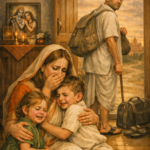
A man walks out on his young family.

As mentioned in the main text of this book, it is fitting to retire from family life at a mature stage, but a young man should not prematurely give up family life in the name of the vānaprastha āśrama merely to avoid family responsibilities.

In this regard, a letter from Śrīla Prabhupāda to his disciple Madhukara Dāsa dated January 4, 1973, is instructive. Madhukara’s wife, Līlā-śakti Dāsī, gives the background of the letter.1

In New Dwarka [Los Angeles] in the early 1970s, it didn’t matter what we wanted or didn’t want, we did what Prabhupāda wanted. Although I wanted to devote my life to Kṛṣṇa and be done with material relationships, since Prabhupāda thought all women should be married, I agreed to get married. But I continued living in the temple and distributing Prabhupāda’s books. After a year-and-a-half, my husband, Madhukara, said to me, “Lila Shakti, I want to have a family,” and he wrote Śrīla Prabhupāda a letter saying if we weren’t going to have a child [which they later did], then he wanted to take vanaprastha. Prabhupāda wrote him a long letter back.

This is the text of that letter:

My dear Madhukara,

I beg to acknowledge receipt of your letter dated December 22, 1972, and I have noted the contents with care. For these questions arising between married husband and wife, you are requesting me to leave your wife and take the vanaprastha order of life, for these questions you must consult with and take permission from presidents and GBC. Yes, I know your wife Lilasakti, and I know that she is very serious and advanced disciple. But now you are married to her, there is some obligation according to our Krsna consciousness or Vedic system. These things cannot be taken so lightly, otherwise the whole thing will become a farce. Simply get married without considering what is the serious nature of married life, then if there is little disturbance, or if I do not like my wife or my husband, let me go away, everyone else is doing like that. So in this way the whole thing is becoming a farce. You say that your “association together was hindering your advancement.” But Krsna consciousness marriage system should not be taken in that way, that if there is any botheration that means something is hindering my spiritual progress, no. Once it is adopted, the grhastha life, even it may be troublesome at times, it must be fulfilled as my occupational duty. Of course, it is better to remain unmarried, celibate. But so many women are coming, we cannot reject them. If someone comes to Krsna it is our duty to give them protection. Krsna has informed us in Bhagavad-gita that even women and sudras and others inferior class of men can take refuge in Him. So the problem is there, the women must have a husband to give protection. Of course, if the women can remain unmarried, and if there is suitable arrangement for the temple to protect them, just like in the Christian Church there is nunnery for systematic program of engaging the ladies and protecting them, that is also nice. But if there is sex desire, how to control it? Women are normally very lusty, more lusty than men, and they are weaker sex, it is difficult for them to make spiritual advancement without the help of husband. For so many reasons, our women must have husband. That’s all right, but if once they have got a husband he goes away so quickly, that will not be very much happy for them.

Now I do not know the situation in your particular case, I am simply giving you the general policy or background understanding. We should never think of our so-called advancement as being conditioned by or dependent upon some set of material circumstances such as marriage, vanaprastha, or this or that. Mature understanding of Krsna consciousness means that whatever condition of life I am in at present, that is Krsna’s special mercy upon me, therefore let me take advantage in the best way possible to spread this Krsna consciousness movement and conduct my spiritual master’s mission. If I consider my own personal progress or happiness or any other thing personal, that is material consideration. If there was unhappy adjustment for becoming married, why you got married at all? Whatever is done, is done, that is a fact, but I am only pointing out that once before you did something without proper study of your real responsibility, now you are contemplating again some drastic action in a similar manner. Therefore consider it carefully in this light. There is one verse from Bhagavad-gita: yasman nodvijate loko lokan nodvijate ca yah/harsamarsa-bhayodvegair mukto yah sa ca me priyah, “He for whom no one is put into difficulty and who is not disturbed by anxiety, who is steady in happiness and distress, is very dear to Me.” (12.15) One mistake of judgment often made by the neophyte devotees is that any time there is some disturbance or some difficulty they are considering that the conditions or the external circumstances under which the difficulty took place are the cause of the difficulty itself. That is not the fact. In this material world there is always some difficulty, no matter in this situation or that situation. Therefore simply by changing my status of occupation or my status of life, that will not help anything. Because the real fact is that if there is any difficulty with others, that is my lack of Krsna consciousness, not theirs. Is this clear? Krsna says that His dearest devotee is one who does not put others into difficulty, in fact, who puts no one other into difficulty. So try to judge the matter on these points, whether or not you are putting either your wife or yourself into some difficulty. The right understanding of Bhagavad-gita is Arjuna’s understanding. In other words, Arjuna came to the conclusion that he must perform his occupational duty, not as a material obligation, for reasons of wife, family, friends, reputation, professional integrity, like that—no. Rather he must conduct the functions of his station of life only as a devotional service performed for Krsna. That means that devotional service is what is important, not my occupational duty. But it does not mean that because occupation duty is not the real consideration, that I should give it up and do something else, thinking that devotional service may be carried on under whatever circumstances which I may whimsically decide. Krsna recommended Arjuna to remain as he was, not to disrupt the order of society and go against his own nature just for convenience sake. Our occupational duty is not arbitrary, that means once we have taken up some field of action, if we are advanced in our understanding, then we shall not change it for another. Rather our devotion is the important factor, so what does it matter what I am doing so long my work and energy are completely devoted to Krsna? Just like Krsna, He is the Supreme Personality of Godhead, He has no work, neither He has anything to do, still He comes here to teach us this lesson. He accepts not only His occupational duty as cowherd boy, royal prince, but also He accepts married life, He enters politics, He is philosopher, He is even chariot driver during a great battle, He does not give example of Himself avoiding His occupational duty. So if Krsna Himself is exhibiting by His own conduct what is the perfection of existence, then we should heed such example if we are intelligent. Even supposing there is wife at home, with children, that does not matter, that is no hindrance to our spiritual life. And once we have accepted these things, occupational duties, we should not lightly give them up. That is the point. Of course, our occupational duty is as preachers of Krsna consciousness. So we must stick to that business under all circumstances, that is the main thing. Therefore married, unmarried, divorced, whatever condition of life, my preaching mission does not depend on these things. The varnasrama-dharma system is scientifically arranged by Krsna to provide facility for delivering the fallen souls back to home, back to Godhead. And if we make a mockery of this system by whimsically disrupting the order, that we must consider. That will not be a very good example if so many young boys and girls so casually become married and then go away from each other, and the wife is little unhappy, the husband is neglecting her in so many ways, like that. If we set this example, then how the thing will go on properly?

Householder life means wife, children, home, these things are understood by everyone, why our devotees have taken it as something different? They simply have some sex desire, get themselves married, and when the matter does not fulfill their expectations, immediately there is separation—these things are just like material activities, prostitution. The wife is left without husband, and sometimes there is child to be raised, in so many ways the proposition that you, and some others also, are making becomes distasteful. We cannot expect that our temples will become places of shelter for so many widows and rejected wives, that will be a great burden and we shall become the laughingstock in the society. There will be unwanted progeny also. And there will be illicit sex life, that we are seeing already. And being the weaker sex, women require to have a husband who is strong in Krsna consciousness so that they may take advantage and make progress by sticking tightly to his feet. If their husband goes away from them, what will they do? So many instances are already there in our Society, so many frustrated girls and boys.

So I have introduced this marriage system in your Western countries because there is custom of freely intermingling male and female. Therefore marriage required just to engage the boys and girls in devotional service, never mind distinction of living status. But our marriage system is little different than in your country, we do not sanction the policy of quick divorce. We are supposed to take husband or wife as eternal companion or assistant in Krsna consciousness service, and there is promise never to separate. Of course if there is any instance of very advanced disciples, married couple, and they have agreed that the husband shall now take sannyasa or renounced order of life, being mutually very happy by that arrangement, then there is ground for such separation. But even in those cases there is no question of separation, the husband, even he is sannyasa, he must be certain his wife will be taken care of nicely and protected in his absence. Now so many cases are there of unhappiness by the wife who has been abandoned by her husband against her wishes. So how can I sanction such thing? I want to avoid setting any bad example for future generations, therefore I am so much cautiously considering your request. But if it becomes so easy for me to get married and then leave my wife, under excuse of married life being an impediment to my own spiritual progress, that will not be very good at all. That is misunderstanding of what is advancement in spiritual life. Occupational duty must be there, either this one or that one, but once I am engaged in something occupational duty, then I should not change that or give it up, that is the worst mistake. Devotional service is not bound up by such designations. Therefore once I have chosen, it is better to stick in that way and develop my devotional attitude into full-blown love of Godhead. That is Arjuna’s understanding.

Hoping this meets you in good health,

Your ever well-wisher,

A. C. Bhaktivedanta Swami


Notes:

1 As quoted in Mālatī Devī Dāsī, A Bond of Love, p. 279.


This is part of a draft

This is an excerpt from a new book I have in the works—The Vānaprastha Adventure, a guide to retirement in spiritual life. The book should be published in early 2026. Meanwhile I’ll be posting my draft here, in installments.

In the vānaprastha āśrama, no sex

April 21, 2026 By Jayadvaita Swami

The Vānaprastha Adventure, Installment 40


Abstinence from sex life is a strict requirement for vānaprastha life. To underscore that point, made in the main text, this appendix gives a selection of statements from Śrīla Prabhupāda to that effect.

There is no sex life except in the gṛhastha, or householder, āśrama. The brahmacārī is not allowed any sex, a vānaprastha voluntarily refrains from sex, and the sannyāsī is completely renounced.

[Bhāgavatam 4.25.38, purport]

In the orders of brahmacarya, vānaprastha and sannyāsa, there are no facilities for sex.

[Bhāgavatam 4.25.39, purport]

One should note that in the brahmacārī-āśrama, vānaprastha-āśrama and sannyāsa-āśrama there is no scope for sex life, whereas sex is allowed in gṛhastha life under regulations.

[Bhāgavatam 7.14.1, purport]

Renunciation means renunciation of sensual pleasure, especially the pleasure of sex. Therefore a brahmacārī, sannyāsī or vānaprastha is strictly prohibited from having relationships with women.

[Cc. Antya 3.105, purport]

So according to Vedic civilization, this training was given [in] the student life—complete abstinence from sex life. Then vānaprastha life, complete abstinence, and sannyāsa life, complete abstinence.

[Lecture, August 31, 1966, New York]

The wife may remain with him as friend, but there is no sex life. That is called vānaprastha.

[Lecture, June 23, 1968, Montreal]

A brahmacārī is supposed to have no connection with women; a vānaprastha is supposed to have no connection with women, even [if] his wife is present; and what to speak of sannyāsī. He has no connection with any women, even with his own wife. . . . The whole idea is that this material existence is due to sex life. That’s all. If you increase your sex life, then increase your duration of material existence. If you decrease your sex life, then you advance towards the path of absolute realization. Yad icchanto brahmacaryaṁ caranti. In the Bhagavad-gītā [8.11] you will find that one who is desiring to go back to Godhead, back to home, then he should practice life of celibacy. That is very important thing.

[Lecture, January 13, 1969, Los Angeles]

In brahmacārī life there is no sex life, in vānaprastha there is no sex life, in sannyāsa there is no sex life. Out of the four stages, in three stages there is no sex life. Only in the married—young married couples, they are allowed sex life, no other. Neither the students, nor the retired, nor the sannyāsīs.

[Conversation, September 13, 1972, Dallas]

First education is brahmacārī—how to train him to avoid sex life. And still if he’s not able, then he is allowed to become a gṛhastha, a little concession. Otherwise, the whole Vedic civilization is: how to avoid sex life. Brahmacārī—no sex life. Vānaprastha—no sex life. Sannyāsī—no sex life. Only gṛhastha, under control.

[Morning walk, May 3, 1976, Fiji]

If the affection continues, then there is no chance of my becoming free from this material world. There is no chance. Therefore vānaprastha. Because. . . affection with the wife is very, very strong. So vānaprastha means the husband and wife, they give up the affection. Not give up—go away from home. And they travel in the holy places just to purify, and again, when the affection draws, they come to the family. Again remain for one or two months, then again go away. So the wife, there is no sex connection, but wife remains as assistant to the man to be accustomed how to remain aloof from the family.

[Lecture 10/21/74, Māyāpur]

So in that stage, vānaprastha stage, the wife is there, but there is no sex life.

[Arrival lecture, February 11, 1975, Mexico City]

So in this way, there is no sex in the vānaprastha. Simply the wife remains as assistant. And she also practices austerities.

[Conversation, July 4, 1975, Chicago]


This is part of a draft

This is an excerpt from a new book I have in the works—The Vānaprastha Adventure, a guide to retirement in spiritual life. The book should be published in early 2026. Meanwhile I’ll be posting my draft here, in installments.

Do it at fifty

April 10, 2026 By Jayadvaita Swami

The Vānaprastha Adventure, Installment 39


hourglass

As mentioned in the main text of The Vānaprastha Adventure, Śrīla Prabhupāda often made the point that by fifty years of age one should accept the vānaprastha āśrama. I said I would gather statements from him about this in an appendix. Here, then, is a sampling.

One is therefore required to give up the attachment to family or social or political life just at the age of fifty years, if not earlier, and the training in the vānaprastha and sannyāsa āśramas is given for preparation of the next life. [Bhāgavatam 2.1.15, purport]

In order to be saved from the danger of spoiling the human form of life and being attached to unreal things, one must take warning of death at the age of fifty, if not earlier. The principle is that one should take it for granted that the death warning is already there, even prior to the attainment of fifty years of age, and thus at any stage of life one should prepare himself for a better next life. [Bhāgavatam 2.1.16, purport]

Pañcāśordhvaṁ vanaṁ vrajet: one must leave his family life and enter the forest after the age of fifty. This is an authoritative statement of the Vedas, based on the division of social life into four departments of activity — brahmacārya, gṛhastha, vānaprastha and sannyāsa. [Bhāgavatam 3.24.35, purport]

Family attraction is so strong that even if one is neglected by family members in his old age, he cannot give up family affection, and he remains at home just like a dog. In the Vedic way of life one has to give up family life while he is still strong. It is advised that before getting too weak and being baffled in material activities, and before becoming diseased, one should give up family life and engage oneself completely in the service of the Lord for the remaining days of his life. It is enjoined, therefore, in the Vedic scriptures, that as soon as one passes fifty years of age he must give up family life and live alone in the forest. After preparing himself fully, he should become a sannyāsī to distribute the knowledge of spiritual life to each and every home. [Bhāgavatam 3.30.14, purport]

One may beget children up to the age of fifty, but after fifty, one must stop begetting children and should accept the vānaprastha order. [Bhāgavatam 4.27.7, purport]

Family life is considered a blind well (andha-kūpam) into which a person falls and dies without help. Prahlāda Mahārāja recommends that while one’s senses are there and one is strong enough, he should abandon the gṛhastha-āśrama and take shelter of the lotus feet of the Lord, going to the forest of Vṛndāvana. According to Vedic civilization, one has to give up family life at a certain age (the age of fifty), take vānaprastha and eventually remain alone as a sannyāsī. That is the prescribed method of Vedic civilization known as varṇāśrama-dharma. [Bhāgavatam 4.29.54, purport]

When one is bound by affection for one’s wife, one is attached to sexual desires that are very difficult to overcome. Therefore, according to Vedic civilization, one must voluntarily leave his so-called home and go to the forest. Pañcāśordhvaṁ vanaṁ vrajet. Human life is meant for such tapasya, or austerity. By the austerity of voluntarily stopping sex life at home and going to the forest to engage in spiritual activities in the association of devotees, one achieves the actual purpose of human life. [Bhāgavatam 9.19.11, purport]

It is said that a man should give up the order of householder life at the age of fifty. But in this era of ignorance even an old man wants to rejuvenate his bodily functions, put on artificial teeth, and make a pretense of youthful life, even on the verge of death. [Light of the Bhāgavata, verse 19]

One must retire from all sorts of family life, big or small, at the age of fifty, and thus prepare for the next life. That is the process of human culture. [Light of the Bhāgavata, verse 34]

Therefore, according to Vedic civilization, there is compulsory get-out from household life. Compulsory get-out means pañcāśordhvaṁ vanaṁ vrajet. Pañcāś means fifty years. As soon as one passes over fifty years of age, he should get out. That is the injunction of the scriptures. No more in household affairs. [Lecture, June 23, 1968, Montreal]

Just like there is a warning bell. . . . You are doing something, you have not finished, but the warning bell is there. . . . The hour is finished, and there is warning bell: cling, cling, cling, cling. Calling. . . . So, similarly by force: “Now you have passed your fiftieth year. Please come out. Please come out.” Now, say one man is sleeping. The warning bell is there: cling, cling. No more sleeping. . . . So the śāstric injunction is like that. . . . Pañcāśordhvaṁ vanaṁ vrajet: “Now you have enjoyed this family life for fifty years. No more, sir. Please stop. Come out.” [Lecture, Calcutta, no date]

Householder life, according to Vedic civilization, is a sort of license for sense gratification. But not for all the time. The injunction is pañcaśordhvaṁ vanaṁ vrajet. Just after your fiftieth year you must give up, retire from householder. That is called vānaprastha. [Lecture, September 16, 1969, London]

My Guru Mahārāja used to say that this householder life means it is a concession for sense gratification. That’s all. But our position is that we should not continue sense gratification for all the life. The sense gratification process is going on by the hogs and dogs throughout the whole life, but we should not be like hogs and dogs. We should cease at a certain time. Pañcāśordhvaṁ vanaṁ vrajet. So far; no more. That should be our motive. Not that continue. That. . . is Vedic way of life. [Lecture, February 23, 1972, Calcutta]

According to Vedic system, therefore, there is forced renunciation. Nobody wants to retire from family life, but the Vedic injunction is that after one has passed fifty years he must leave his family life. Pañcāśordhvaṁ vanaṁ vrajet. [Lecture, December 7, 1972, Ahmedabad]

Up to fifty years, you can remain attached. But pañcāṣordhvaṁ vanaṁ vrajet: After your fiftieth year, you must give up your family life. Vanaṁ vrajet. Go to the forest for tapasya. That was the system. Here at the present moment, everywhere, all over the world, when he is going to die, still he is attached to his political life, social life, family life. That is not knowledge. That is ignorance. You must be detached. Vairāgyam. [Lecture, October 5, 1973, Bombay]

At the present moment, people retire by force or by some way or. . . But they do not know what is the ultimate goal of life. There are many retired men’s house in your country, but they do not know what is the ultimate goal of life. Ultimate goal of life is to understand the Supreme Personality of Godhead. Because in your busy life you have got very little time, therefore after gṛhastha life—fifty years up to, not more than that—pañcāśordhvaṁ vanaṁ vrajet, then you must retire. It doesn’t matter whether you have finished your duty or not. [Lecture, December 17, 1973, Los Angeles]

We have got very much attachment for this material world. . . . Therefore according to Vedic system there is compulsory renunciation. “Get out, please, immediately.” Pañcāśordhvaṁ vanaṁ vrajet. “You are now past fifty years. That’s all right. You have falsely fought in this material world, ahaṁ mameti. Now stop this business. Come out.” This is Vedic civilization. As soon as you are fifty years. . . Just like children, they play on the beach, making sand house and so on. Now, the father, when the time is up: “Now, my dear children, stop this business. Come out. Come here, home.” So we have to do that. [Lecture, November 10, 1974, Bombay]

We are thinking we are very happily living with nice wife and children and working very hard, getting money. But śāstra says, “You are fallen in the dark well.” Gṛham andha-kūpam. And “All right, let me remain here.” “No.” Ātma-pātam: If you remain in this way, then you will kill your soul. Ātma-pātam. Therefore in the Vedic civilization there is compulsory: “Get out.” Pañcaśordhvaṁ vanaṁ vrajet. “Now you are fifty years old past. Immediately get out.” “No, I have got so many duties. I have got this.” “No, no.” Vrajet: “compulsory.” This [form of] verb is used, vidhi-liṅ, where there is no argument: you must. Just like when nature calls you, you must do it. . . . This is Vedic civilization. Not that unless you are killed or being shot down by somebody else, you are not leaving the gṛham andha-kūpam. This is not Vedic civilization. [Lecture, December 8, 1975, Vṛndāvana]

So therefore real Vedic civilization is that gradually we have to give up this gṛha-vrata position. At one time you must voluntarily give up. Although I do not like to give up, still, by the order of the śāstra, one has to give up. Pañcasordhvaṁ vanaṁ vrajet. Vrajet means compulsory. Just like we accept so many things compulsory, similarly, to give up family attachment after fiftieth year, that is compulsory. . . . Of course, nobody can go to the forest. That is not possible. They are not trained up as brahmacārī. So this Hare Kṛṣṇa Land—“Come on.” All the vānaprasthas—they can live in this land or Vṛndāvana, Hyderabad, simply for bhagavad-bhajana and no other purpose. Anyābhilāṣitā-śūnyaṁ, making all other purposes zero. [Morning walk, January 8, 1977, Bombay]

Svarūpa Dāmodara Dāsa: He said his aim is to make as many bridges as possible. . . . He thinks that’s some sort of philanthropic work.


Śrīla Prabhupāda: This is māyā. This is māyā. What he can do? He will die. This is called māyā. Therefore our system is because you are rascal, do all rascaldom up to fiftieth year. Then give it up. All kinds of rascaldom you can continue. Pañcāśordhvaṁ vanaṁ vrajet. Then you retire from all this rascal work.

[Conversation, January 31, 1977, Bhubaneswar]


This is part of a draft

This is an excerpt from a new book I have in the works—The Vānaprastha Adventure, a guide to retirement in spiritual life. The book should be published in early 2026. Meanwhile I’ll be posting my draft here, in installments.

My personal finances, 2025

February 21, 2026 By Jayadvaita Swami

Every year I make my personal finances public. Attached is an accounting of my finances for 2025.

2025 Financial reportDownload

The vānaprastha and pre-vānaprastha checklists

February 9, 2026 By Jayadvaita Swami

The Vānaprastha Adventure, Installment 38


Checklists for vanaprastha life

The items listed here have been discussed in some detail earlier in the book. (In The Vānaprastha Adventure they appear as Appendix 1.) For the most part the items are listed in no particular order, and some may also overlap. Go through the list and start adopting items, as you may choose.

The pre-vānaprastha checklist

(Mainly items to adopt long before entering vānaparastha life)

  • Marry timely
  • Have strong sādhana
  • Follow the four regulative principles strictly
    • No intoxicants, including coffee and tea
    • No meat, fish, or eggs
    • No gambling
      • This includes “idle sports.” If you still have an interest in sports or games, this is the time to give it up.1
    • No illicit sex
      • This means no sex except for the sake of having children. Even if you find this rule difficult, accept that you should follow it, and take steps in that direction.
  • Have children early and be done with it (but not through using contraceptives)
  • Have a definite vānaprastha target
    • Make it part of your family’s strategic plan. When do you want to enter vānaprastha life? How do you plan to do it? Meditate on these things—and arrange your life accordingly.
  • Follow sensible financial planning
    • Keep expenses low
    • Stay out of debt
    • Invest sensibly
  • Don’t hoard
  • Be charitable
  • Follow some austerity
    • Rise early
    • Follow Ekādaśī
    • And so on.
  • Do all you can to share Kṛṣṇa consciousness with others
    • Distribute books
    • Do programs at your home
    • Go door to door
    • Arrange conferences
    • Start saṅga groups or other initiatives
    • Whatever!
  • Write and execute a last will. You can revise it later. But do it. In the event of your death, that document can help make sure your wishes are followed. And whether you die soon or not, writing and executing that document will help you remember your mortality.2
  • Execute a medical power of attorney or a living will (or both).3
  • Train children or others to take over your duties
  • As the time approaches, start closing up shop

The vānaprastha checklist

1) No-risk steps

Mental steps

  • Put aside your image of yourself as a gṛhastha; that’s not what you are anymore
  • Develop philosophically supported detachment from children, grandchildren, relatives, and so on.
  • Change your focus: from mostly family to mostly Kṛṣṇa consciousness
  • Keep your impending death in view
  • Sharpen your focus on reviving your eternal relationship with Kṛṣṇa as his eternal servant

Practical steps

  • Practice marital social distancing
    • Separate beds
    • Separate rooms
    • Avoid dressing and undressing in front of one another
    • Disentangle those two gross and subtle bodies
  • Refrain entirely from sex
  • Simplify eating
    • Eat at regular times
    • Eat in moderate amounts
    • Eat simple food
    • Avoid eating food cooked by nondevotees
      • Avoid precooked food from stores
      • Stay away from restaurants (Even devotee restaurants, with their spirit of enjoyment, may generally be better to avoid.)
  • Simplify sleeping
    • Use a simple bed, or the floor
    • Follow regulated times for sleeping
    • Sleep only as much as needed
  • Optionally, perform a ceremony to solidify your determination
  • Change your name (Dāsa Vanacārī or Dāsa Gauravanacārī)
  • Simplify your dress
  • Change your colors (white or yellow cloth; saffron only if the wife is deceased or long gone)
    • For women, a plain white sari only if the husband is no longer; otherwise according to choice (one option is white with a colored border)
  • Get rid of what you don’t need (you don’t need much)
  • Trim your hair or shave it off
  • If you have facial hair, off with it
  • I am reluctant to advise women what to do. But one reader of my manuscript has suggested that women give up jewelry, makeup, nail-painting, hair dye, and fancy clothing.
  • Wear tilaka
  • Shun grāmya-kathā
  • Get rid of grāmya-kathā distractions
    • Cancel newspaper and magazine subscriptions
    • Clear your shelves of needless mundane books
    • Cancel your cable subscription
    • Ditch your television altogether
    • Limit your computer time
      • Off before 9 am
      • Use software tools to restrict your involvement with the internet
    • Limit your use of the phone
    • Hear and speak about Kṛṣṇa
  • Turn away from social media
  • Avoid mundane social occasions—birthdays, graduations, weddings, anniversaries, and so on
  • Get rid of needless stuff—sell it, give it away, somehow get rid of it
  • Switch to a simpler car
  • Consider a more modest dwelling
  • Cut your expenses
  • Cultivate the mood of being satisfied with less, with what comes on its own
  • Learn to depend less on your partner
  • Give up luxurious life
  • Accept austerity

Up the sādhana

  • Live a regulated life. Rest early, rise early, do the same things at the same times every day.
  • Strengthen your daily program of sādhana
    • Japa
    • Kīrtana and bhajana
    • Hearing
    • Reading and study
  • Take advantage of systematic study groups and courses
    • If you can take courses “on site,” away from home, so much the better. And at a holy place, better still.
  • In your regular reading and hearing, notice the things Śrīla Prabhupāda says about retirement and vānaprastha life. Consider how they might apply for you. Take steps to bring your life closer to what you’ve understood.
  • Perform pūjā
  • Serve tulasī
  • Take greater advantage of Ekādaśīs, Kārttika, and other such occasions
  • Avoid wasting time
  • Chant Hare Kṛṣṇa
  • Pray to Kṛṣṇa for help and guidance

Up the sādhu-saṅga

  • Attend temple programs
  • Take advantage of online saṅga
  • Take part in small devotional groups
  • Invite sādhus to your home
  • Attend festivals
  • Attend retreats
  • Go on pilgrimages
  • Go on padayātrā
  • Associate with those who, like you, are on the path of detachment
  • Speak with others about what you’ve done to move on from householder life to the life of a vānaprastha. Hear from others what they have done.
  • Avoid loose association
  • Avoid professional Bhāgavatam reciters
  • Avoid materialists, Māyāvādīs and prākṛta-sahajiyās
  • Seek senior, more advanced association (but choose with care, being faithful to your spiritual master and your sampradāya)
  • Spend time traveling with sādhus

Up the sevā

  • Perform temple service
  • Use your skills for the movement
  • Render service to Vaiṣṇavas
  • Serve as a mentor
  • Organize home programs, other programs for temple congregations, or engagements beyond the temple and congregation, including festivals and retreats
  • Give temple classes—at your local temple and other temples
  • Lead home programs
  • Lead other programs for the temple congregation
  • Give seminars
  • Speak or chant at festivals and retreats
  • Teach at ISKCON venues like the educational institutes in Vṛndāvana and Māyāpur
  • Go beyond the temple and congregation. Do programs at nondevotee venues.
  • Get out and preach
  • Go meet people door to door
  • Distribute books
  • Cultivate people’s interest in Kṛṣṇa consciousness
  • Write
    • Write magazine articles
    • Write online contributions
    • Write letters to newspapers
    • Write letters to leaders in society
    • Write books

2) Steps with some risk

  • Retire from your job
  • Retire early, regardless of pensions and social security
  • Travel and preach

Notes:

1 At an initiation ceremony Śrīla Prabhupāda said, “The third… And no gambling or unnecessary sporting. People are wasting time. So many sportings they have invented—sporting balls, this ball, that ball. You see? Human life is very short. We do not know when we shall die. Before that, we must prepare ourself for the next life. Next life means directly going back to Kṛṣṇa, highest perfection.” (Dec. 19, 1968, Los Angeles) For health, however, Śrīla Prabhupāda did encourage walking and swimming.

2 For parents with minor children, having a will is particularly important. If both parents suddenly die, who is legally entitled to custody of the children?

3 A last will tells what you want done after you die. In contrast, a living will and medical power of attorney deal with what sort of medical treatment you want (or don’t want) while you’re still alive. Should you lose your ability to communicate, your living will instructs doctors and other caretakers about your wishes. Additionally (or alternatively), your medical power of attorney gives someone you trust the authority to speak on your behalf. Americans especially may find useful these resources given in the References: “Tips for Advance Care Planning,” “Tool Kit for Advance Care Planning,” and “Free Advance Directive Forms.” In India, a 2023 decision by the Supreme Court simplified procedures for executing a living will. In the References, see “Living Will and Healthcare Power of Attorney Authorisation” (IAPC).


This is part of a draft

This is an excerpt from a new book I have in the works—The Vānaprastha Adventure, a guide to retirement in spiritual life. The book should be published in early 2026. Meanwhile I’ll be posting my draft here, in installments.

The end of vānaprastha life

January 17, 2026 By Jayadvaita Swami

The Vānaprastha Adventure, Installment 37


Sannyāsa or death

Vānaprastha life ends either with sannyāsa or with death. When one is free from attachment, especially to sex, one can accept sannyāsa.1 By accepting sannyāsa we can follow in the footsteps of Śrīla Prabhupāda and previous ācāryas, fix ourselves firmly in devotional service to the lotus feet of Kṛṣṇa, and with determination cross beyond the insurmountable ocean of material nescience.2 And sannyāsa especially serves as a platform for increased preaching.3

Accepting sannyāsa

Traditionally, one might take sannyāsa all of a sudden, as did Śrīdhara Svāmī and Śrī Caitanya Mahāprabhu. Or else sannyāsa might be the final point of a gradual but evident process. While Kadamba Kānana Swami, for example, was the temple president of ISKCON’s Kṛṣṇa-Balarāma temple in Vṛndāvana, he was a householder. But after some time he began living separately from his wife. They would spend some time together every day, but gradually, once she was used to the distance, he made the time less and less. After a while they no longer met every day, and after some more time the meetings became rare, though he and his wife would exchange notes. Eventually even the notes stopped. And finally—sannyāsa.

To give another example: Every year my friend Atul Kṛṣṇa Dāsa (a vānaprastha as of this writing) used to invite Kadamba Kānana Swami and me to his flat in Māyāpur for a sumptuous lunch cooked by his wife. Then one year he invited us again but told us, “I’m no longer living there. My wife lives there, and I live down the road.” In this way, a process.

Accepting death

If we don’t get as far as sannyāsa but the time comes when the body can no longer support a useful life, we can give that body up, and finally must.4

We’ve talked about our biology’s telling us what to do. At a certain stage that biology says, “Retire. Family life is not such a great kick anymore.” And at a certain stage it says, “Life itself is no longer worth the trouble to sustain. Better to get ready to go.”

Śrīla Prabhupāda did that. When his final illness came, he made various attempts to recover his health. Then he came to Vṛndāvana and said, in essence, “I’ve come to Vṛndāvana to leave this world.” And finally he left.

Before Śrīla Prabhupāda’s departure, his disciple Jayānanda Prabhu served till the last and then gave up: “What is the use of carrying on with this useless body?” And so his departure was exemplary.

Similarly, Kadamba Kānana Swami came to Vṛndāvana to accept death, considering it “a change of service.”

Many other examples can be given.

Earlier in our life we can preach, we can do bhajana, we can do so many things. And then at a later stage: “There’s really nothing more I can do. Let me set my affairs in order. Let me give up my last attachments. Let me say my goodbyes. And let me go.”

We have to go. So rather than go kicking and screaming we can surrender. Kṛṣṇa says, kālo ’smi loka kṣaya-kṛt pravṛddhaḥ: “I come as death.”5 So all right: “If you’ve come, I accept your presence, and I’m ready to go.”

In the purport to Bhāgavatam 4.23.13 Śrīla Prabhupāda mentions that when King Pṛthu understood that the end of his life was near “he became very jubilant and proceeded to completely give up his body.” Śrīla Viśvanātha Cakravartī Ṭhākura says that King Pṛthu was eager: “Let me now give up this body, become a pure spiritual form, go at once to Vaikuṇṭha, and serve the feet of the Lord!”

Fasting unto death

The Bhāgavatam (11.18.11) says that when a vānaprastha is overtaken by old age and with his trembling body can no longer perform his prescribed duties, he should place the sacrificial fire within his heart by meditation, fix his mind on Lord Kṛṣṇa, enter that sacrificial fire, and give up his body.

Today we may not have the meditative power to immolate ourselves like Dhṛtarāṣṭra in an internally conceived sacrificial fire.6 But elsewhere in the Bhāgavatam (7.12.23) we read:

yadākalpaḥ sva-kriyāyāṁ vyādhibhir jarayāthavā
ānvīkṣikyāṁ vā vidyāyāṁ kuryād anaśanādikam

“When because of disease or old age one is unable to perform his prescribed duties for advancement in spiritual consciousness or study of the Vedas, one should practice fasting, not taking any food.” And so one dies.

The Sanskrit term for this process is prāyopaveśa (“fasting unto death”).7 Of course, instead of fasting one may simply let death come in its own time. But as indicated above in the Bhāgavatam, one may expedite the process by fasting.

If one merely gives up eating, doctors say, one may still live for months. But if one gives up eating and drinking one will leave quickly, within days.8 Even in modern Western society doctors and courts have increasingly recognized “voluntarily stopping eating and drinking” (VSED) as a valid personal end-of-life choice.9 In 1977 in Vṛndāvana Śrīla Prabhupāda once said that this is how a gentleman leaves this world—by giving up eating and drinking.10

To accept death in this way is not strange or unreasonable. At a certain point one just thinks, “Enough! There’s no point in trying to extend my life. It’s over. Nothing more can be done. Now let me go.”

One need not pursue every possible treatment and try to fight death to the last. Instead one may think, “Just let me die. But let me die in Kṛṣṇa consciousness.”

Our perfect example is Mahārāja Parīkṣit. Of course, he didn’t give up eating and drinking as a way of hastening death; he was going to die anyway. But he set the example of giving up everything, even eating and drinking, and spending his last days fully absorbed in hearing about Kṛṣṇa.

Afterword for Part One

What about the two devotees Hari Bhakti Dāsa and Rāma Caraṇa Dāsa with whom this book began? Just as I made their circumstances up, I suppose that for symmetry I could make up how these devotees moved forward and retired. But I won’t. Finally what matters is not their fictional life but your real one. If you’re headed toward spiritual retirement (or you’ve already retired), I wish you all success. By the grace of Kṛṣṇa, may you cross beyond anything that might hold you back, may you move forward in full strength, and may you attain perfection in pure devotional service at Lord Kṛṣṇa’s lotus feet.


Notes:

1 See Śrīla Prabhupāda’s arrival address, Mexico City, February 11, 1975.

2 Bhāgavatam 11.23.57.

3 Sannyāsa life “means preaching transcendental knowledge to the society from door to door.” Śrīla Prabhupāda in a radio interview, March 12, 1968, San Francisco.

4 Regarding the two ways to end vānaprastha life—with sannyāsa or with death—see Bhāgavatam 11.18.11‒12.

5 Gītā 11.32.

6 For Dhṛtarāṣṭra’s dying in an internally generated mystic fire, see Bhāgavatam 1.13.57.

7 Bhāgavatam 1.19.7.

8 The usual expectation: between ten and fourteen days, though up to twenty-one days also falls within “the general range of survival” (Hope Wechkin et al. “Clinical Guidelines for Voluntarily Stopping Eating and Drinking.” Journal of Pain and Symptom Management 66, no. 5 (2023): e625–31. https://doi.org/10.1016/j.jpainsymman.2023.06.016. p. e627). My mother and her mother years before her both gave up eating and drinking, and both were gone within three days.

9 A book on the clinical, ethical, and legal aspects of this topic is Voluntarily Stopping Eating and Drinking: A Compassionate, Widely-Available Option for Hastening Death, Timothy E. Quill et al (editors), Oxford University Press, 2021. In America VSED to hasten death is legally accepted in all fifty states.

10 Bhavānanda Dāsa, personal interview, February 9, 2025, Sydney, Australia.


This is part of a draft

This is an excerpt from a new book I have in the works—The Vānaprastha Adventure, a guide to retirement in spiritual life. The book should be published in early 2026. Meanwhile I’ll be posting my draft here, in installments.

Benefits of adopting the vānaprastha āśrama

December 19, 2025 By Jayadvaita Swami

The Vānaprastha Adventure, Installment 36


We can follow in Śrīla Prabhupāda’s footsteps

We have looked at what the vānaprastha āśrama is and what obstructions we might need to deal with. Here let’s look at some of the benefits of accepting the vānaprastha āśrama.

Having a realistic picture of what the future has in store

Let’s look first at one benefit of even having a vānaprastha āśrama and thinking about it. Acknowledging the importance of the vānaprastha āśrama—and thinking about the vānaprastha āśrama—keeps us mindful of the reality that’s in everyone’s future, including our own: the reality of death. In the Bhagavad-gītā Kṛṣṇa says that an essential part of cultivating knowledge is to be always mindful of the miseries of old age and death.1 Especially as we age, we can remember that death will come—soon—and that our real business is to get free from material entanglements and absorb ourselves in Kṛṣṇa consciousness. And so we need to move forward, spend our last years with this focus, and ultimately be ready to die.

Having this reality clearly in mind can help us shape how we live and what we do not only in old age but throughout our life. And this can help us be fully Kṛṣṇa conscious both in this life and at the time of our death.

Freedom from work

Among the benefits of actually adopting the vānaprastha āśrama, what first comes to my mind is freedom from working life, with its drudgery, its tensions and entanglements, the materialistic association it usually demands of us, and its daily claim on most of our waking hours. Now again our time becomes our own, to use for our own spiritual progress—and the service of our spiritual master and Kṛṣṇa.

A fresh new life

As our time becomes our own, we have the freedom to use it for whatever will best fulfill our highest hopes and most true desires. We have time for Kṛṣṇa kīrtana, for study of the Bhāgavatam, for bathing in the Ganges at Māyāpur. We have time for sādhu-saṅga, for learning and teaching, for spreading Kṛṣṇa consciousness in London or Paris or New York or Cairo or any town or village in the world. We’re no longer bound by obligations to a small domestic world. We can set out on the vānaprastha adventure.

Following in Śrīla Prabhupāda’s footsteps

Śrīla Prabhupāda became a vānaprastha around 1951, near about the age of fifty-five. By adopting the vānaprastha āśrama, we follow in Śrīla Prabhupāda’s footsteps. And so, by following Śrīla Prabhupāda, we put theoretical knowledge into practice.

Detachment from matter, attachment to Kṛṣṇa

On this path, we gain greater control over our mind and senses, and we become increasingly detached from the material world and increasingly attached to Kṛṣṇa As we often heard from Śrīla Prabhupāda, Lord Caitanya came to this world to teach detachment, transcendental knowledge, and devotional service to him, the Supreme Personality of Godhead. As Sarvabhauma Bhaṭṭācārya writes:

vairāgya-vidyā-nija-bhakti-yoga- śikṣārtham ekaḥ puruṣaḥ purāṇaḥ
śrī-kṛṣṇa-caitanya-śarīra-dhārī kṛpāmbudhir yas tam ahaṁ prapadye

“Let me take shelter of the Supreme Personality of Godhead, Śrī Kṛṣṇa, who has descended in the form of Lord Caitanya Mahāprabhu to teach us real knowledge, his devotional service, and detachment from whatever does not foster Kṛṣṇa consciousness. He has descended because he is an ocean of transcendental mercy. Let me surrender unto his lotus feet.”2

Similarly, from the Śrīmad-Bhāgavatam (1.2.12) we hear that pure devotional service is supported by knowledge and detachment (jñāna-vairāgya yuktayā). And from the Bhagavad-gītā (15.3) we hear that we should cut ourselves free from the endless complexities of the material banyan tree by the weapon of determined detachment (asaṅga-śastreṇa dṛḍhena chittvā).

The vānaprastha āśrama helps foster that detachment. We become increasingly free from material designations—from “I” and “mine”—free from attachment to family ties, and free especially from woman and the shackles of sex. And as we progress we develop greater attachment to Kṛṣṇa.

In particular, the vānaprastha āśrama affords us the opportunity to focus on the five main limbs of devotional service:

sādhu-saṅga, nāma-kīrtana, bhāgavata-śravaṇa
mathurā-vāsa, śrī-mūrtira śraddhāyasevāna

We can live in Vṛndāvana

We get the opportunity to associate with like-minded devotees and with devotees more advanced, as Vidura met with Maitreya, and Parīkṣit with Śukadeva. We get to cleanse our hearts in kīrtana of Lord Kṛṣṇa’s holy names. We get to hear Śrīmad-Bhāgavatam and be enlightened by its message. We can live in such a holy place as Vṛndāvana or Māyāpur. And we can serve the Supreme Personality of Godhead, with faith and veneration, in his transcendental Deity form. From Caitanya-caritāmṛta (Madhya 22.128‒129) we hear that even slight engagement in these five main items of devotional service awakens our natural love for Kṛṣṇa.

By increasingly engaging ourselves in such a life of pure devotional service, we surely please our spiritual master and Kṛṣṇa. And instead of a life of hard work for small returns, we find ourselves on the path of unlimited spiritual happiness (brahma saukhyaṁ tv anantam).3

On this path, we can preach and serve, and ideally a man can move on towards the next āśrama, sannyāsa.

And whether in vānaprastha or in sannyāsa, we can take full shelter of Kṛṣṇa and prepare ourselves for our final time. No one can guarantee that our death will be natural or peaceful or easy. But if we are Kṛṣṇa conscious we can be assured, “When I leave I’ll proceed on the path back home, back to Godhead.”

These blessings are all advantages for us. But beyond this, adopting the vānaprastha āśrama enables us to benefit others as well.

Helping reestablish daiva-varṇāśrama

As we know, Śrīla Prabhupāda said that the unfulfilled part of his mission was to reestablish the Vedic social system, varṇāśrama dharma. And among the āśramas, vānaprastha has been a gap, a hole—the missing āśrama. By becoming vānaprasthas, one or two of us at a time, we help fill that social gap, making the vānaprastha āśrama visible and tangible and real, for the benefit of our own family and Society and the world, now and in the future.

Vānaprasthas for preaching and sevā

Vānaprasthas can also render immediate practical service to the Kṛṣṇa consciousness movement. The movement needs teachers, needs pūjārīs, needs mentors and guides, needs devotees who know how to do things. Who can cook the noon offering? Who can lead the design team for the new temple? Vānaprasthas can.

Brahmacārīs may be few. Gṛhasthas are busy earning a living, and these days if we want them to take up full-time service they most often expect stipends and salaries.

But vānaprasthas have their time free, they have decades of experience and expertise, and they can serve for the sake of serving, without expecting to be on a temple payroll. They can go anywhere to spread Kṛṣṇa consciousness. Vānaprasthas, therefore, are poised not only to refresh their own lives but to give life to the Kṛṣṇa consciousness movement.

As mentioned before, by adopting vānaprastha life we also get out of the way, letting the next generation take over. By handing over posts and responsibilities, we give younger devotees a chance to take over—and with youthful vigor and vision.

Moreover, by adopting vānaprastha life we set an example for our contemporaries—for other householders due (or overdue) for spiritual retirement—and we set an example for future generations, for our children and grandchildren: This is what old age is for.


Notes:

1 Janma-mṛtyu-jarā-vyādhi- duḥkha-doṣānudarśanam. (Gītā 13.9)

2 This verse, recorded in Śrī Kavi-karṇapūra’sCaitanya-candrodaya-nāṭaka (6.74), is quoted in Śrī Caitanya-caritāmṛta (Madhya 6.254).

3 Bhāgavatam 5.5.1.


This is part of a draft

This is an excerpt from a new book I have in the works—The Vānaprastha Adventure, a guide to retirement in spiritual life. The book should be published in early 2026. Meanwhile I’ll be posting my draft here, in installments.

Obstacles to accepting the vānaprastha āśrama: #12. Lack of a clear path forward

December 9, 2025 By Jayadvaita Swami

The Vānaprastha Adventure, Installment 35


Sometimes we know we ought to move forward and we want to but we don’t know how. The path ahead seems hazy, even murky.

For brahmacārī life, gṛhastha life, or sannyāsa there’s a fairly clear pattern: step 1, step 2. . . But for vānaprastha life, what are the steps? What am I supposed to do? And where do I even begin?

This book is meant to help answer such questions. And as more and more devotees take to vānaprastha life, we’ll have their examples to follow and their experience upon which to draw.

Meanwhile, and above all, we have the examples set by Śrīla Prabhupāda and by predecessor ācāryas, and we have their words of instruction and the guidance of śāstra. The light of their words, and our sincerity, will make our path clear.

———-


This is part of a draft

This is an excerpt from a new book I have in the works—The Vānaprastha Adventure, a guide to retirement in spiritual life. The book should be published in early 2026. Meanwhile I’ll be posting my draft here, in installments.

View All News Articles

Copyright © 2026 Jayadvaita Swami.
BBT material © The Bhaktivedanta Book Trust International, Krishna.com. All rights reserved.

Loading Comments...

You must be logged in to post a comment.